
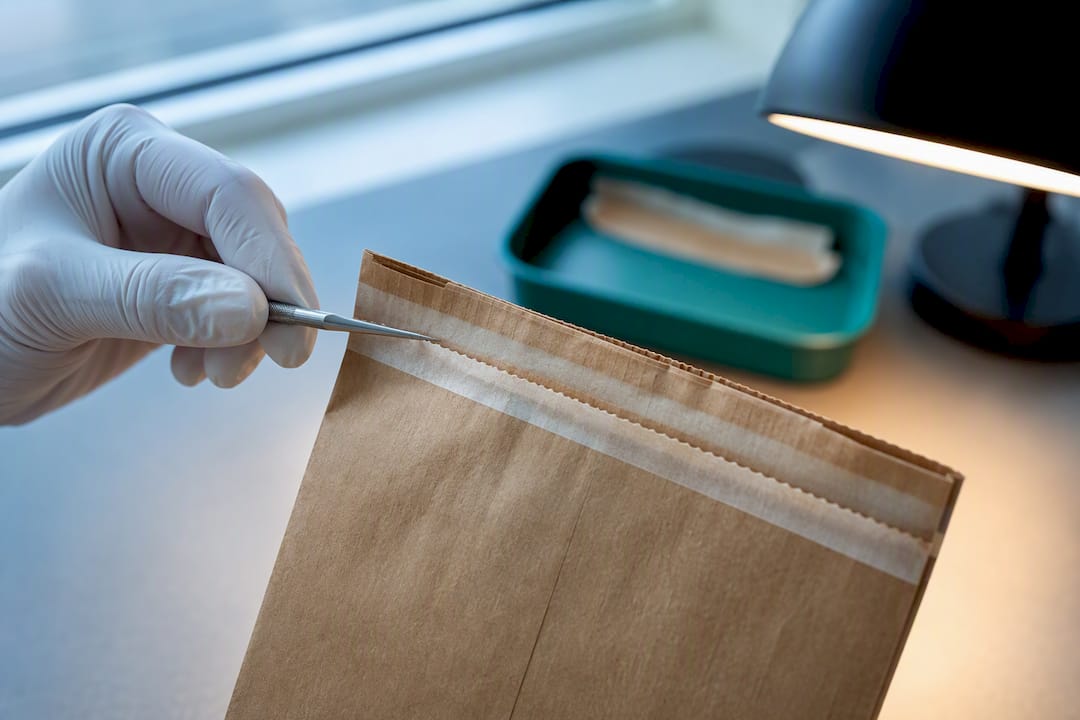
Bag security features fall into two categories: tamper-evident closures that show visible proof of opening, and tamper-resistant construction that slows unauthorized access in the first place. For most retail, click and collect, and food delivery programs, the right move is an integrated peel-and-seal closure for visible evidence, backed by reinforced handles or heat-sealable coatings when the contents or delivery route carry higher risk.
TL;DR:
- Using tamper-evident peel-and-seal closures with reinforced handles is ideal for high-risk delivery or retail scenarios to provide visible proof of tampering.
- Combining tamper-evident features like destructible tape with tamper-resistant measures such as heat-sealable coatings maximizes security and delays unauthorized access.
- Security features should be chosen based on product value, transit exposure, regulatory requirements, and customer perception, with high-value and regulated items needing more robust solutions.
- Security features must be tested thoroughly through adhesion, environmental, and transit simulations, with inspection and documentation required before bulk production.
- Domestic prototyping and clear standardization help prevent added labor costs and operational disruptions during rollout of tamper-evident paper bags.
Table of Contents
- What Are Bag Security Features on a Paper Shopping Bag?
- How Do Tamper-Evident and Tamper-Resistant Features Differ on a Bag?
- How Do You Choose Security Features by Use Case?
- Materials, Printing, and Sustainability Trade-Offs
- What Quality Assurance Testing Should You Require From a Manufacturer?
- Planning a Rollout Without Disrupting Fulfillment
- Why Tamper-Evidence Beats Tamper-Resistance as Your Starting Point
- Ready to Prototype a Tamper-Evident Paper Bag?
- Sources
What Are Bag Security Features on a Paper Shopping Bag?
Bag security features on a paper shopping bag mean tamper-evident and tamper-resistant construction, not the lockable zippers or slash-proof panels associated with personal travel bags. That distinction matters for procurement teams writing specs, because vendors and RFP templates sometimes borrow language from the consumer travel category that has nothing to do with retail packaging.
Tamper-evident and tamper-resistant are related but distinct concepts. Tamper-evident features leave a visible or audible sign that a bag has been opened, while tamper-resistant features make unauthorized access physically harder to begin with, according to the PFFC industry overview on tamper packaging. The two work best together. A 3PL logistics reference on tamper packaging frames it well: resistance buys you delay, evidence buys you certainty, and combining both closes more gaps than either one alone.
For a foodservice operator handing off a sealed takeout order, or a pharmacy running click and collect, that combination is the whole point. The customer needs to trust the bag was untouched between the counter and their hands, and staff need a fast way to confirm nothing happened in between.
How Do Tamper-Evident and Tamper-Resistant Features Differ on a Bag?
Tamper-evident features on a paper bag work by leaving unmistakable proof after the fact. The most common options include:
- Integrated peel-and-seal closures built into the bag itself, which eliminate the extra step of applying a separate label and cut down on packing errors.
- Destructible security tape that fractures or delaminates when pulled, leaving residue or a broken pattern rather than resealing cleanly.
- VOID-pattern labels that print a hidden message once the adhesive bond is broken.
- Perforated tear strips that require visible destruction to open the bag.
- Shrink bands adapted for paper bag necks or handles, mostly used on bundled or multi-item orders.
Tamper-resistant features work differently. Instead of proving something happened, they make the something harder to do. Reinforced turn-top or serrated-top closures add friction to casual opening. Bonded, multi-ply handles resist the kind of stress that lets someone quietly detach and reattach a bag. Heat-sealable coatings, applied at the neck or flap, require a heat source to open cleanly, which rules out a quick peek and reseal.
The trade-offs are real. Integrated peel-and-seal closures speed up packing but usually cost more per unit than a plain flap. Heat-sealable coatings need a heat tunnel or handheld sealer on the packing line, which is a bigger operational lift than sticking on a label. Destructible tape and VOID labels are cheap and fast to apply, but they carry a small false-positive risk: rough handling in transit can sometimes trigger the same visual cues as an actual breach. Recyclability also varies. Water-based adhesives and paper-based tapes generally keep a bag within standard recycling streams; some film-based tapes do not.
How Do You Choose Security Features by Use Case?
Start with a short risk assessment before you spec anything. Four factors drive the decision:
- Product value. Higher-value contents justify higher-cost features.
- Transit exposure. A bag that changes hands multiple times (courier, locker, front desk) needs more evidence than a bag handed directly to the customer.
- Regulatory status. Alcohol, pharmacy, and certain restricted retail categories often have documented tamper-evidence requirements.
- Customer sensitivity. Categories like prescription pickup or high-ticket apparel carry outsized reputational risk if a customer perceives tampering, even without proof.
Mapping those factors to features usually looks like this: a basic in-store retail bag might only need a printed security sticker at the fold. Click and collect orders benefit from an integrated peel-and-seal closure, since staff are sealing dozens of bags a shift and need speed without sacrificing evidence. Food delivery bags typically pair a tamper-evident label with a heat-sealable flap, since tamper-evident labels used in food delivery are designed to break cleanly on opening while resisting grease and moisture. Pharmacy and high-value retail pickup call for the most robust combination: integrated closure, reinforced handles, and serialized seal numbers for chain-of-custody tracking.
Pro Tip: Before locking in a spec, run a same-day sample approval with your actual packing team. A feature that looks great on paper can add 15 to 20 seconds per bag on a busy line, and that adds up fast during a lunch rush.
Procurement should also require documented performance acceptance criteria and a first-article inspection before any bulk run, not just a photo of a sample.
Materials, Printing, and Sustainability Trade-Offs
Security features do not have to work against your sustainability goals, but the wrong adhesive or coating can quietly undercut them. Paper-based tamper tape with water-based adhesive keeps a bag recyclable; some film laminates and solvent-based adhesives do not. Specify FSC® certified paper stock and recycled content wherever the security feature allows it, and confirm with your manufacturer that the closure itself does not disqualify the bag from a compostable or recyclable claim.
Printing and serialization deserve their own line in the spec:
- Place printed security markings (VOID text, serial numbers) where staff can check them without opening the bag fully.
- Integrate barcode or QR elements near the seal, not buried under a fold, if you want scan-and-verify at handoff.
- Numbered seals help with chain-of-custody on high-value or regulated orders but add a data-tracking step your team needs to actually use.
Balance visibility against brand presentation. A seal that dominates the bag face can crowd out your logo and print; one that is too subtle gets missed at checkout. Simple instructional text near the seal (“torn seal means opened”) reduces customer confusion more than any icon.
What Quality Assurance Testing Should You Require From a Manufacturer?
Specs are only as good as the testing behind them. Ask your manufacturer for documented production tests and a defined receiving procedure before you sign off on a run.
Production tests should include:
- Adhesion and dwell tests that measure peel force, confirming the seal holds under normal handling but still fails visibly when forced.
- Removal and destruct tests on VOID labels or destructible tape, verifying the fracture pattern is consistent and can’t be reset.
- Environmental conditioning, checking seal performance after heat and humidity cycles that mimic a delivery vehicle or storeroom.
- Transit simulation, since a seal that passes a bench test can still fail in a bag jostled across a delivery route.
Receiving checks matter just as much as production tests. Staff should visually inspect a sample from each incoming batch, verify serialized seal IDs against the packing list, photograph any breach found on arrival, and follow a quarantine and reporting procedure rather than quietly setting damaged units aside. Gatherpackaging’s tamper seal procurement guide lays out the specific dwell-test and post-conditioning checks worth writing into a contract, and Canadian sector guidance modeled on LCBO tamper-evidence standards is a useful reference point for what an acceptable versus unsaleable closure looks like. Build sample approval, first-article inspection, batch testing frequency, and a documented corrective-action process into the contract itself, not just the spec sheet.
Planning a Rollout Without Disrupting Fulfillment
Cost drivers for bag security features come down to four things: the material premium on the closure itself, any new tooling (dispensers, heat tunnels), labor time per unit if the process is manual, and how much that per-unit time actually adds to a packing shift. A logistics industry overview of parcel packaging practices makes a similar point about sealing methods generally: the cheapest option per unit is rarely the cheapest option once labor time is factored in.
- Pilot before you scale. Run a small batch in one high-risk store or delivery route, with staff trained on the new closure and clear tracking of detection rates and false positives.
- Standardize the format. Pick one seal design and placement across all bag sizes so staff don’t have to relearn inspection steps per SKU.
- Build it into receiving SOPs. Log every incident, breach, or false positive so the next production run can be adjusted with real data instead of guesswork.
Why Tamper-Evidence Beats Tamper-Resistance as Your Starting Point
Most procurement teams overspend on resistance before they’ve nailed evidence, and that’s backwards for a paper shopping bag. A thicker handle or a stiffer fold might slow someone down for a few extra seconds, but it doesn’t tell your staff or your customer anything happened. An integrated peel-and-seal closure does. It’s the difference between hoping nothing went wrong and knowing, at a glance, whether it did.
I’d also push back gently on the instinct to treat sustainability and security as competing priorities. They’re not, as long as the seal and adhesive are specified correctly from the start. Gatherpackaging builds tamper-evident closures directly into FSC® certified, recycled paper stock, using water-based inks and 8-color flexo printing that keeps the seal legible without overwhelming the brand design. Domestic prototyping in Toronto means procurement teams can test a closure design, run a small pilot, and adjust before committing to a full production run, rather than discovering a problem after a container ships from overseas.
— Taylor
Ready to Prototype a Tamper-Evident Paper Bag?
Gatherpackaging is the alternative to importing generic security bags overseas and hoping the closure survives the trip. Because production runs through our own facility in Toronto, procurement teams can move from sample approval to a full production order without the long lead times and customs uncertainty that come with offshore tamper-evident bag suppliers.
Our team builds integrated peel-and-seal closures, reinforced handles, and heat-sealable coatings directly into custom paper bags, backed by the production and receiving QA checks outlined above. Choose from FSC® certified and recycled paper stock, 8-color flexo printing for security markings and branding, and domestic prototyping that lets you test a closure before locking in a bulk order. If your click and collect, food delivery, or pharmacy pickup program needs tamper-evident bags that hold up under real handling, request a custom quote and sample and we’ll help you spec the right closure for your risk profile and volume.
Share:
Retail Brands: Domestic Prototyping for a Safer Plastic to Paper Switch
Operator Ready White Underbase: Mesh, 190–220°F Flash and 3 Fabric Test