
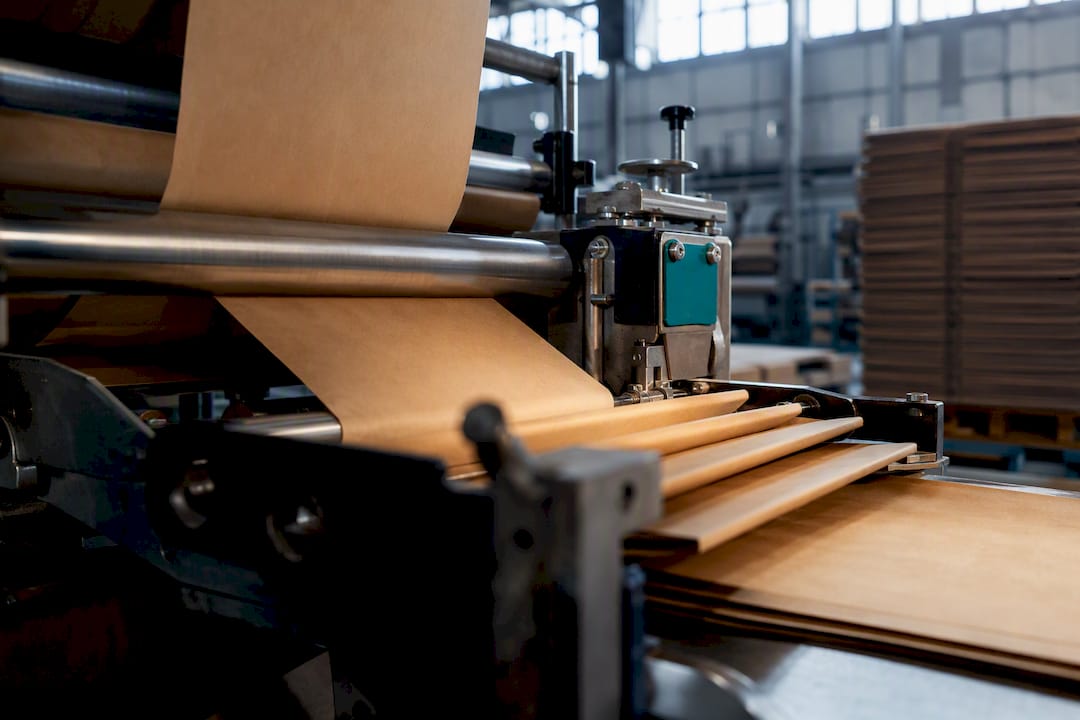
Whether your paper bags face surtax at the Canadian border comes down to two things: the HS tariff line they fall under and where they were made. If the goods are U.S. origin and the tariff line appears on the Finance Canada surtax schedule, you’re looking at an added 15%, 25%, or 50% charge on top of regular duty. Check the HS code and origin documentation before you book the shipment, not after it clears.
TL;DR:
- Surtax rates of 15%, 25%, or 50% apply to U.S.-origin paper bags if the HS code appears on Canada’s surtax list, stacking on top of regular duty.
- Correct classification depends on detailed product specifications like width, wall construction, and coating, requiring proper documentation and potential CBSA rulings to avoid reassessment delays.
- Domestic manufacturing in Canada eliminates surtax exposure and simplifies customs compliance by removing origin and HS classification uncertainties.
- Accurate landed cost calculations must consider the invoice value, duty, surtax, GST, handling fees, and unit quantity for precise profit analysis.
- Misclassification or origin errors can trigger customs audits; maintaining thorough documentation, current supplier origin statements, and classification records is essential to mitigate risks.
Table of Contents
- What HS Codes Cover Paper Bags Entering Canada?
- Which Paper Bag Tariff Lines Face the U.S. Surtax?
- What Taxes and Fees Apply Beyond Duty and Surtax?
- How Do You Classify and Declare Paper Bag Imports Correctly?
- How Do You Calculate Landed Cost on an Imported Paper Bag Shipment?
- What Customs Mistakes Trigger Audits, and How Do You Avoid Them?
- How Does Domestic Manufacturing Reduce Surtax and Compliance Exposure?
- A Procurement Perspective on Sourcing Paper Bags in 2026
- Get a Customs-Aware Quote for Your Next Paper Bag Order
- Sources
- FAQ
What HS Codes Cover Paper Bags Entering Canada?
Most paper shopping bags and sacks fall under Chapter 48 of the tariff schedule, specifically headings 4819.10.00, 4819.40.00, and the related 481930 line. Classification hinges on a few physical details customs officers check against the paperwork, not the marketing copy.
- Base width: sacks and bags with a base of 40 cm or more typically land under HS code 481930, a line well represented in the Canadian Importers Database.
- Wall construction: single-wall kraft bags classify differently than multiwall industrial sacks.
- Surface treatment: coated, laminated, or printed bags can shift the line versus plain uncoated stock.
- End use declared on the invoice: retail carrier bags versus packing containers sometimes fall under different subheadings even when the material looks identical.
Run your product specs against the Finance Canada tariff schedule or the Canadian Importers Database before you commit to a classification. If the construction is unusual (window patches, reinforced handles, tamper seals) or the value at stake is significant, request a binding ruling from the Canada Border Services Agency rather than guessing. A wrong HS code is the single fastest way to trigger a customs reassessment months after the goods have already sold through.
Which Paper Bag Tariff Lines Face the U.S. Surtax?
The United States Surtax Order takes effect September 8, 2026, and it changes the math for anyone sourcing paper packaging from American suppliers. The order applies a surtax of 15%, 25%, or 50% of the value for duty on listed tariff items, and Finance Canada’s product list confirms several paper and packaging lines sit at the 25% and 50% bands.
Surtax band snapshot: Under Customs Notice CN26-23, surtax rates run 15%, 25%, or 50% of the value for duty depending on the tariff item, and the surtax stacks on top of regular MFN duty rather than replacing it.
Origin is the trigger, not just the shipping address. If your paper bags qualify to be marked as U.S. origin under CUSMA rules and the HS line appears on the surtax schedules, the surtax applies regardless of who the invoice comes from. A U.S. distributor reselling Canadian-made bags is a different case than a U.S. mill producing the paper itself, so origin documentation matters more than the shipping label.
- Surtax is calculated on the value for duty, the same base used for regular customs duty.
- GST is then calculated on an amount that includes the surtax, so the tax pyramids on top of itself.
- The surtax applies in addition to any existing MFN duty on the same tariff line.
That compounding effect is easy to miss when you’re estimating landed cost from memory instead of running the actual math.
What Taxes and Fees Apply Beyond Duty and Surtax?
Duty and surtax are only part of the bill. GST at 5% applies to the duty-paid value, which already includes any surtax, so the tax base grows before GST even gets calculated. Provinces with HST or PST layer their own rate on top, and CBSA’s guidance on courier and postal imports spells out how that assessment happens depending on the entry method.
- De minimis thresholds differ by carrier type, with courier shipments and postal imports following separate rules for when duty and tax get collected at all.
- Courier brokerage fees and disbursement charges are common add ons that industry guides like Jet Worldwide’s Canadian import fee breakdown flag as routine, not optional.
- DDP versus DAP terms shift who pays and when: Delivered Duty Paid bakes duty and tax into your supplier invoice, while Delivered At Place leaves you exposed to a separate bill from the carrier at the border.
Get the shipping terms in writing before the first container leaves the dock, not after the brokerage invoice shows up.
How Do You Classify and Declare Paper Bag Imports Correctly?
A clean declaration starts well before the shipment arrives. Build a checklist and run it every time, especially if you rotate between suppliers or product styles.
- Request a signed origin statement from your supplier that specifies country of manufacture, not just country of shipment.
- Collect construction specs, sample bags, or product photos that support your HS classification on paper.
- Confirm the tariff line against the Finance Canada schedule or ask CBSA for a classification opinion if the product sits near a boundary between headings.
- Keep the paper trail: commercial invoice, packing list, bill of lading, and any origin certificates need to match each other line for line.
- Declare through CARM using the Commercial Accounting Declaration, and if the shipment is U.S. origin on a listed tariff line, apply the correct surtax code: 26186A for 15%, 26186B for 25%, or 26186C for 50%.
- Check remission eligibility if the bags are imported for further manufacture, processing, or packaging in Canada; conditions apply and documentation needs to support the claim from day one.
Pro Tip: Save every classification decision and supporting document in one file per SKU, not scattered across email threads. When CBSA asks for backup two years later, that folder is the difference between a quick answer and a scramble.
How Do You Calculate Landed Cost on an Imported Paper Bag Shipment?
Run the math in order, every time, rather than eyeballing a percentage on top of the invoice.
- Start with value for duty: invoice value plus freight and insurance to the Canadian border.
- Apply duty and, if applicable, surtax based on the confirmed HS line and origin.
- Calculate GST (5%, plus HST or PST where it applies) on the duty and surtax inclusive value.
- Add carrier brokerage and disbursement fees, which are separate from government charges.
- Divide the total by units shipped to get your true per-bag landed cost.
Two scenarios, same product: A non U.S. origin shipment on a standard paper bag tariff line pays regular duty and GST with no surtax layer. The same shipment from a U.S. supplier, on a tariff line listed at the 50% surtax band, adds that surtax to the value for duty before GST is even calculated. The proportional gap between those two outcomes is exactly why origin verification happens before the purchase order, not after.
Rerun this calculation whenever freight terms, order quantity, or declared value change. Landed cost is not a fixed number; it moves with every input.
What Customs Mistakes Trigger Audits, and How Do You Avoid Them?
Misclassification is the most common reason CBSA opens a verification review, and paper bags are an easy target because similar looking products can sit under different tariff lines depending on wall count or base width. Keep product-spec documentation on file, and get a binding ruling when a classification is genuinely ambiguous.
Origin and marking errors are the second major trigger, particularly now that the surtax order makes origin a financial question, not just a labeling one. A supplier that ships from the U.S. but manufactures elsewhere needs paperwork proving that, or you risk paying surtax that never should have applied, or worse, missing surtax that CBSA later assesses with penalties attached.
- Keep supplier origin statements current, not just on file from the last order.
- Match marking records to actual manufacturing location, not shipping origin.
- Ask about remission early if the bags will be used in Canadian manufacturing or packaging operations; the remission provisions have conditions that need documentation from the start of the import, not after an assessment lands.
Pro Tip: If your supplier relationship changes, mid-run, from a U.S. mill to a Canadian one, update your classification file the same week. Customs audits often look back across an entire product run, and a stale origin statement is worse than no statement at all.
How Does Domestic Manufacturing Reduce Surtax and Compliance Exposure?
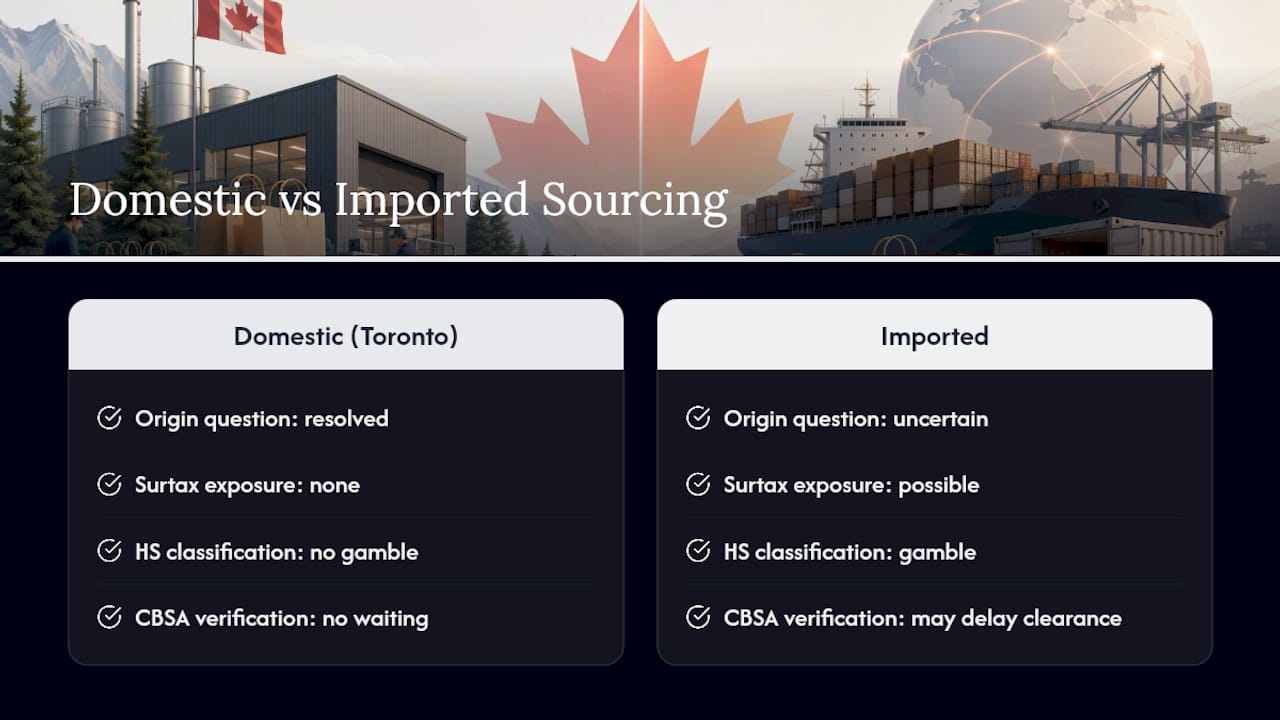
A domestic manufacturer produces paper shopping bags in Toronto using FSC certified and recycled materials with 8 color flexo printing, backed by quality assurance and prototyping at every stage. Sourcing domestically removes the origin question entirely: there’s no surtax exposure, no HS classification gamble, and no waiting on a CBSA verification to clear a shipment. For procurement teams weighing sourcing options against the surtax order, that’s a straightforward way to eliminate one entire category of risk. The made in Canada page outlines the manufacturing details.
A Procurement Perspective on Sourcing Paper Bags in 2026
The surtax order is not a one-time headline. It’s a policy lever that can shift again, and paper packaging has already landed on both the 25% and 50% bands depending on the tariff line. Any procurement team still sourcing paper bags from U.S. suppliers without a current origin statement on file is carrying risk it hasn’t priced yet.
My take: verify HS code and origin before you negotiate price, not after. When certainty or delivery timing matters more than shaving a few cents off unit cost, domestic manufacturing removes the entire question. Trade policy in this category has moved twice in two years. Betting a supply chain on it staying still is not a strategy, it’s a gamble with someone else’s purchase order.
— Taylor
Get a Customs-Aware Quote for Your Next Paper Bag Order
Gatherpackaging is the alternative to guessing at landed costs every time trade policy shifts: our Toronto manufacturing means your paper shopping bag order never touches a surtax schedule in the first place. We produce Turn Top, Serrated Top, and Tamper-Resistant Serrated Top paper bags, all customizable with FSC certified and recycled materials, water-based inks, and 8-color flexo printing.
Beyond manufacturing, we handle die-line preparation, graphic design, pre-press proofing, prototyping, and warehouse and logistics, so procurement teams get one point of contact instead of juggling a broker, a printer, and a freight forwarder. If you’re comparing an import quote against a domestic one, ask us for a landed-cost comparison using your actual HS codes and volumes. Contact Gatherpackaging to discuss your paper shopping bag needs, or browse our kraft paper bag options to see current styles and finishes.
Sources
- Customs Notice 26-23: United States Surtax Order (2026)
- Orders In Council — United States Surtax Order (attachment)
- List of products from the United States subject to counter-tariffs (Finance Canada)
FAQ
What Items Are Exempt From Import Duty in Canada?
Exemptions depend on the tariff line, the value for duty, and specific remission programs; goods used in Canadian manufacturing or packaging may qualify for surtax remission under the Orders in Council provisions, but there’s no blanket exemption for paper bags as a category.
What Is the HS Code for Paper Bags?
Most paper shopping bags fall under HS 481930 or related 4819.10.00 and 4819.40.00 lines, with the exact code depending on base width, wall construction, and coating.
Is There a Tariff on Paper From the United States Right Now?
Yes, if the paper or paper bag tariff line appears on the Finance Canada surtax list and the goods are U.S. origin, a surtax of 15%, 25%, or 50% applies in addition to regular duty starting September 8, 2026.
What Are the Current Import Duty Rates in Canada for Paper Bags?
Regular MFN duty rates vary by specific tariff line and are listed in the Finance Canada tariff schedule; U.S.-origin goods on listed lines carry an additional surtax on top of that base duty, and Gatherpackaging can help you compare that total against a Canadian-made quote using your actual HS codes.
Share:
Water Based Ink Safety: Demand SDS, Migration Tests, Ventilation
Procurement: Paper Bag Shipping and Pack Out Specs for Orders Under 200 kg