

If you’re sourcing North American folding-carton converters as alternatives to Astro Box Corporation, the fastest path to a reliable shortlist is confirming nine procurement-critical capabilities before you send a single RFQ: location and regional coverage, box-type specialty, minimum order quantities (MOQs), lead times, printing and finishing capabilities, materials and sustainability certifications, prototype and sample policy, QA and transit testing, and value-added services such as design, logistics, and warehousing.
FSC Canada documents that Canadian suppliers increasingly offer FSC chain-of-custody certified papers, 100% recycled-content options, and water-based inks for retail and foodservice packaging. Domestic production in Canada or the U.S. also shortens lead times and reduces customs exposure compared to offshore sourcing. Once you’ve confirmed those nine capabilities, your next step is a single RFQ and sample brief that specifies dimensions, product weight, board grade, Pantone or CMYK print specs, finishing requirements, quantity tiers, target ship dates, and acceptable tolerances.
Key Takeaways
Confirming nine procurement-critical capabilities before requesting samples is the single most effective way to shortlist North American folding-carton converters and avoid costly production surprises.
| Point | Details |
|---|---|
| Confirm nine capabilities first | Verify location, box type, MOQ, lead time, print, certifications, sample policy, QA, and value-added services before outreach. |
| Use a standardized RFQ | Send every vendor the same brief covering dimensions, board grade, print specs, quantity tiers, and ship dates. |
| Budget beyond unit price | Include tooling, proofs, freight, and a lead-time buffer; domestic sourcing reduces customs and rework risk. |
| Verify FSC and QA documents | Request current chain-of-custody certificates and transit-test results before committing to production. |
| Gatherpackaging for retail bags | When retail carrying and faster turnaround matter, Gatherpackaging’s Canadian-made paper shopping bags offer a domestic, FSC-certified alternative. |
Table of Contents
- What should you confirm about a converter before reaching out?
- How do you find and contact North American folding-carton converters?
- How do you score and compare shortlisted converters?
- What does North American folding-carton work actually cost?
- Which sustainability credentials should procurement teams prioritize?
- What red flags should you watch for when vetting vendors?
- When do paper shopping bags outperform folding cartons for retail?
- Why domestic manufacturing still matters more than most buyers expect
- Gatherpackaging’s Canadian-made paper shopping bags for retail buyers
- Useful resources for buyers
- Sources
What should you confirm about a converter before reaching out?
A good pre-contact checklist prevents wasted outreach and makes vendor responses directly comparable. According to Huamei’s supplier evaluation guide, evaluating suppliers on capability range, certification portfolio, MOQ and lead-time realism, transit-grade testing, and ESG audit readiness before committing to production is what separates vendors that can scale quality from those that only win on samples.
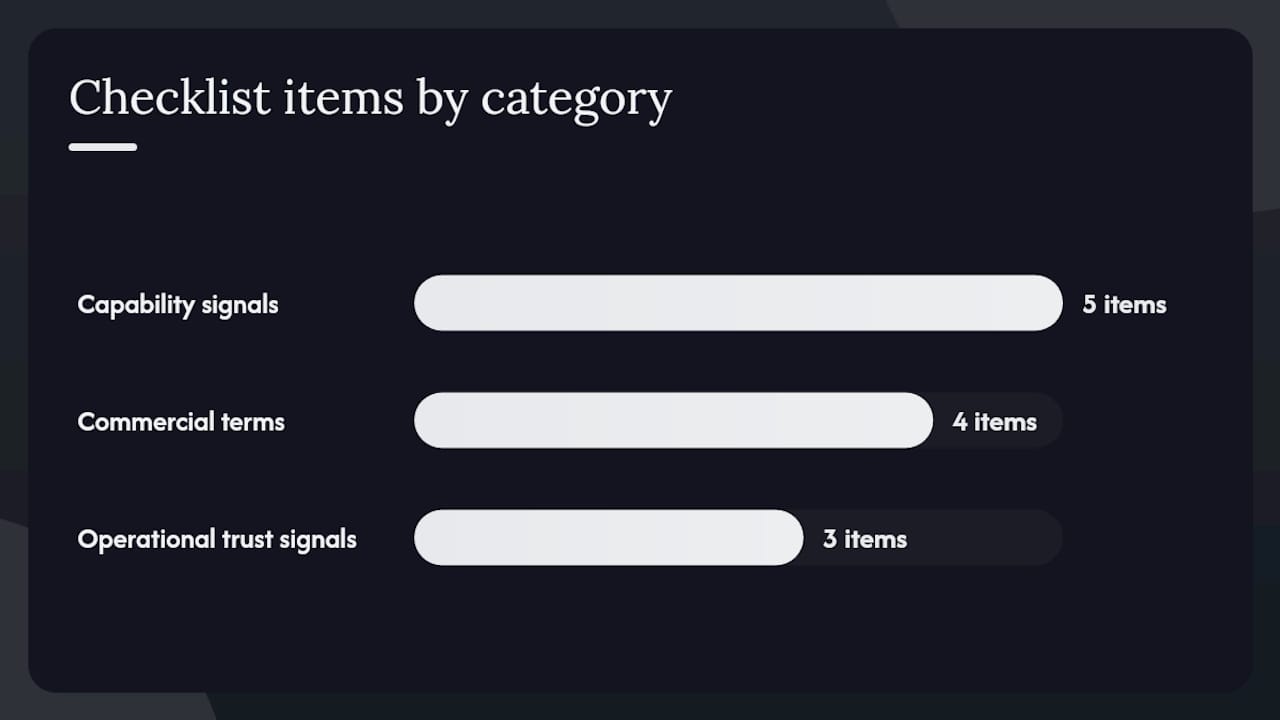
Capability signals to verify:
- Substrates stocked: folding carton board grades (SBS, UK, CCNB), recycled board options, and FSC-certified stock
- Tooling and die-cut capacity: in-house die-making versus outsourced, and turnaround on custom structures
- Printing methods: flexo, offset, or digital, and the maximum number of colors per pass
- Finishing options: aqueous coating, UV varnish, soft-touch lamination, emboss, deboss, and foil
- Published QA procedures and transit testing capability, including onsite QC at every production stage
Commercial terms to confirm:
- MOQ per SKU and per run
- Sample policy: whether samples are free, charged, or applied against the first production order
- Tooling and die charges: one-time versus amortized
- Payment terms and freight or Incoterm options
Operational trust signals:
- Factory photos or a virtual tour of the production floor
- Recent client case studies or two verifiable references with similar product categories
- Evidence of onsite QC protocols and a logistics network that covers trucking, rail, and cross-border distribution, as Evergreen Resources recommends
A local custom-packaging supplier should walk buyers through structural options before print files are finalized and offer prototyping, finishes, and kitting or fulfillment support, per Microforum Bespoke’s guide for Toronto brands.
Pro Tip: Don’t equate the lowest unit quote with total project cost. Validate tooling charges, rework rates, freight, and any customs exposure before ranking vendors by price.
How do you find and contact North American folding-carton converters?
Sourcing channels worth prioritizing:
- Industry directories and trade associations focused on North American converters
- Regional manufacturing directories filtered by province or state
- Procurement platforms that list verified supplier capabilities
- Trade shows where converters exhibit production samples
Prioritize vendors with domestic North American capacity when lead time and supply reliability are critical. KimEcopak’s procurement guide confirms that cost-structure transparency, including a breakdown of tooling, printing, finishing, and freight, is the baseline for comparing quotes accurately.
Once you have a shortlist, send every vendor the same RFQ brief. Gatherpackaging’s Canadian-made paper shopping bag pages show how a well-structured product page can clarify available styles, print capabilities, and sample policies before a buyer even picks up the phone.
RFQ and sample brief template:
| RFQ Field | What to Specify |
|---|---|
| Box/bag dimensions | Length × width × depth in mm or inches |
| Product weight | Maximum fill weight per unit |
| Board grade | SBS, CUK, CCNB, recycled, or FSC-certified |
| Print specs | Pantone or CMYK references, number of colors, bleed |
| Finishing | Aqueous, UV, lamination, emboss, foil |
| Quantity tiers | MOQ, mid-run, and full-production quantities |
| Target ship date | Required in-hands date and acceptable buffer |
| Destination | Ship-to address and preferred Incoterm |
| Tolerances | Color delta, dimensional, and weight tolerances |
| Sample requirement | Number of samples, color proof required (yes/no) |
How do you score and compare shortlisted converters?
Ask every vendor to complete the same comparison matrix. Procurement teams that weight conversion-critical columns higher, specifically lead time, QA, sustainability, and prototype policy, tend to make faster, lower-risk decisions. Follow up with sample orders from the top two scorers only.
| Dimension | What to Evaluate |
|---|---|
| Location / regional coverage | Domestic vs. offshore; proximity to your distribution center |
| Specialty / box-type capability | Folding carton, retail bag, set-up box, mailer |
| MOQ | Per SKU and per run; flexibility for short runs |
| Lead time / capacity | Sample turnaround, production run weeks, peak-season buffer |
| Printing & finishing | Methods, max colors, finishing options available |
| Materials & sustainability certifications | FSC, recycled content, water-based inks, biodegradable coatings |
| Prototype & sample policy | Cost, timeline, color-proof process |
| QA & transit testing | Onsite QC stages, transit test results available |
| Value-added services | Design support, logistics, warehousing, kitting |
Vendors who fill every cell with specifics, not vague ranges, are the ones worth advancing to sample stage.
What does North American folding-carton work actually cost?
Unit price is rarely the number that determines total project cost. Budget for every line item below before comparing quotes.
Cost drivers to include in every budget:
- Tooling and die setup: one-time or amortized across a run
- Plate and press setup fees
- Color proofs and press checks
- Substrate premiums for FSC-certified or recycled board
- Finishing add-ons: lamination, foil, and emboss each carry separate costs
- Packaging, palletizing, and labeling
- Freight, insurance, and any cross-border duties
- Rework or color-mismatch costs if QA tolerances are not met upfront
Realistic domestic lead times:
- Sample turnaround times vary depending on structural complexity.
- Short runs and prototypes typically require several weeks after sample approval.
- Full production runs generally take multiple weeks depending on capacity and tooling needs, with longer durations possible for custom tooling or peak-season scheduling.
Ask vendors to break out tooling, sample, unit, and freight costs as separate line items and to confirm the production capacity reserved for your order, as KimEcopak’s guide recommends. Offshore cost savings are often offset by customs duties, longer lead times, and higher rework risk, per Forbes, making domestic sourcing a materially lower-risk option for time-sensitive retail runs.
Which sustainability credentials should procurement teams prioritize?
FSC Canada is the primary certification to verify for virgin-fiber board. Request the supplier’s current chain-of-custody certificate, check the issue date, and confirm the certificate number is active in the FSC database. Beyond FSC, documented recycled-content claims and supplier statements on water-based inks and biodegradable coatings matter for retail and foodservice-contact applications.
Materials to prefer:
- Folding-carton grades that pass transit-grade testing for retail display and shipping
- Recycled or FSC-certified board with matching print and finishing processes
- Water-based or solvent-free inks, particularly for foodservice-contact bags
Gatherpackaging’s sustainability page outlines FSC-certified and recycled-material options alongside water-based ink choices, which gives buyers a concrete benchmark for what a credible sustainability disclosure looks like. Request current certificates, published QA procedures, sample color proofs, and written confirmation of ink type before approving production.
What red flags should you watch for when vetting vendors?
Some warning signs only surface when you ask direct questions. Watch for these:
- No production photos, factory tour, or virtual walkthrough available
- QA procedures described verbally but not documented or shareable
- Unwillingness to provide sample color proofs before production approval
- Tooling or sample fees quoted as open-ended or “to be confirmed”
- Vague lead-time windows with no capacity confirmation
Exact questions to ask every shortlisted vendor:
- “Can you share recent transit-test results for a structure similar to ours?”
- “What is the issue date on your current FSC chain-of-custody certificate?”
- “What is your sample timeline and cost, and is that cost applied against the first order?”
- “Can you provide two client references with similar product categories and run sizes?”
Per Huamei’s audit checklist, a supplier audit should include recent FSC chain-of-custody certificates, current social-compliance audit reports, SGS test reports, sample runs of the requested structure, and transit test results. Vendors who respond with documents rather than verbal assurances are the ones worth advancing. Treat vague delivery windows or open-ended tooling fees as negotiation points only after QA standards are confirmed.
When do paper shopping bags outperform folding cartons for retail?
The choice between folding cartons and paper shopping bags comes down to four variables: protective requirements, unit economics at your target run size, in-store handling expectations, and logistics.
| Decision Factor | Folding Carton | Paper Shopping Bag |
|---|---|---|
| Product protection | Rigid panels, internal inserts, multi-part sets | Lower weight-to-strength needs, soft goods |
| Retail handling | Shelf display, stacking, structural form required | Walk-out retail, in-store carrying, gifting |
| Fulfillment speed | Longer setup for custom tooling | Faster fulfillment, simpler pack-out |
| Branding priority | Print on all panels, structural presentation | Large print surface, handle visibility |
| Lead time | several weeks production | Shorter for domestic Canadian production |

When retail handling and speed-to-shelf are the primary goals, Canadian-made paper shopping bags can reduce lead time and supply-chain complexity compared to offshore folding-carton orders. Domestic manufacturing shortens lead times, reduces cross-border risk, and simplifies QA and prototyping, as Gatherpackaging’s manufacturing page documents.
Why domestic manufacturing still matters more than most buyers expect
The procurement instinct to chase the lowest unit price is understandable, but it consistently underweights the cost of a missed ship date. Domestic converters, whether for cartons or paper bags, give you a shorter feedback loop on samples, faster color-proof iterations, and a QA conversation you can have in the same time zone.
The buyers who get the best outcomes are the ones who treat the sample stage as a real evaluation, not a formality. Request factory photos. Ask for the actual transit-test report, not a summary. Confirm that the QA acceptance criteria are written into the purchase order before production starts. Those three steps alone eliminate most of the costly surprises that show up at final inspection.
Gatherpackaging’s Canadian-made paper shopping bags for retail buyers
When your retail brief centers on in-store carrying, brand presentation, and a faster path from proof to shelf, Gatherpackaging’s Canadian-made paper shopping bags are a direct, domestic alternative to offshore folding-carton sourcing. Manufactured in Toronto, they ship without cross-border delays and come with the full procurement support that folding-carton buyers expect: prototyping, color proofing, FSC-certified substrates, water-based inks, and 8-color flexo printing across turn top, serrated top, and tamper-resistant styles in custom sizes.
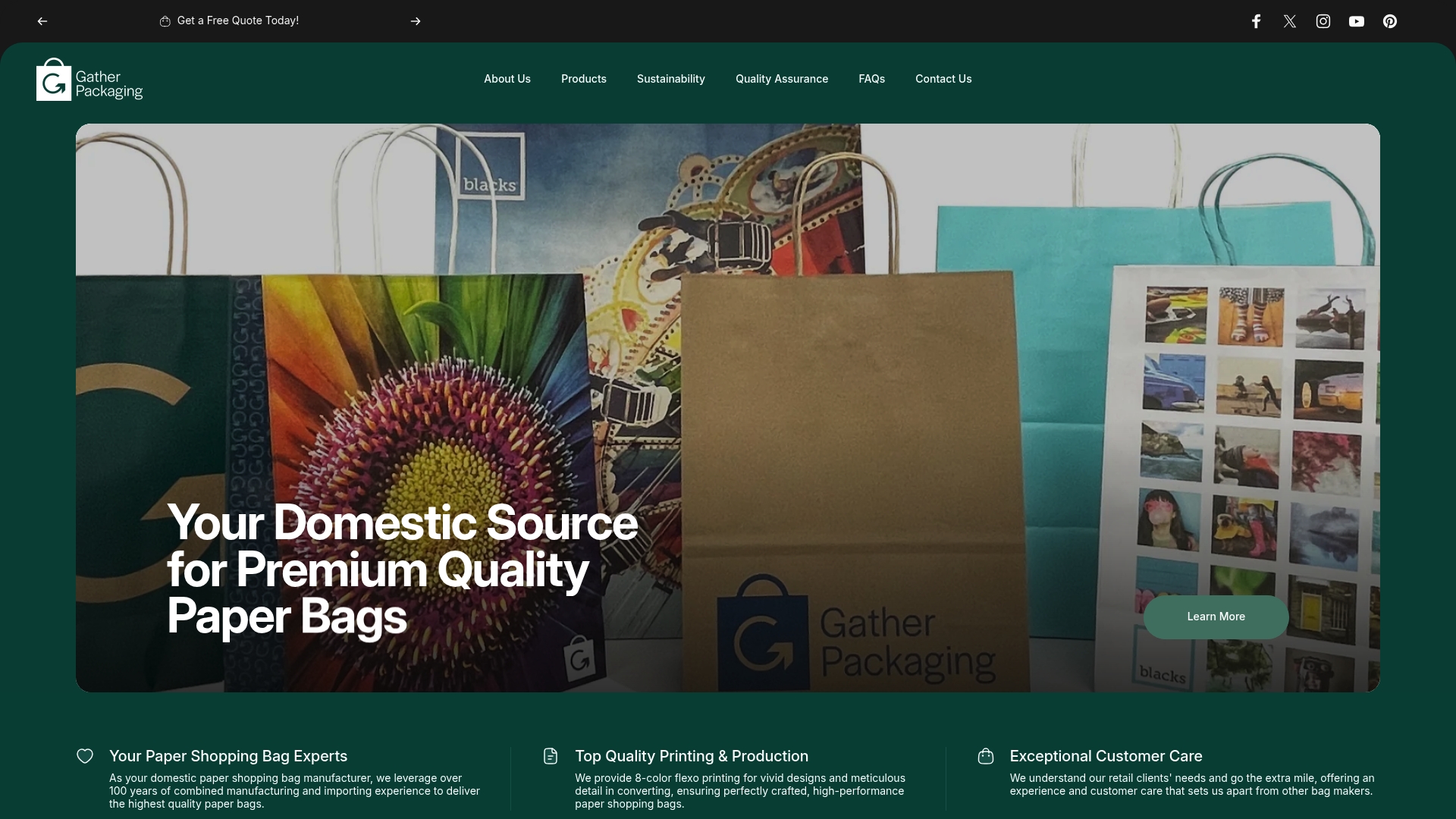
The sustainability credentials are documented and verifiable, not marketing language. FSC chain-of-custody certification, recycled-content options, and solvent-free inks are standard, not add-ons. Contact Gatherpackaging to discuss your sample run, review color proofs, and confirm lead times for your next retail packaging order.
Useful resources for buyers
| Resource | What you’ll confirm |
|---|---|
| FSC Canada | Active chain-of-custody certificate numbers and current certification status for any supplier |
| Huamei supplier audit checklist | Five capability signals and the full audit document list to request from shortlisted vendors |
| Evergreen Resources QC guide | Onsite QC protocol examples and logistics network questions to ask manufacturers |
| Gatherpackaging made-in-Canada page | Available bag styles, print capabilities, sample policy, and how to request a quote |
| FSC-certified packaging guide for buyers | How to read FSC certificates and verify chain-of-custody documentation when vetting suppliers |
Sources
- FSC Canada
- Custom Packaging in Toronto: What Local Brands Need to Know Before Ordering - Microforum Bespoke
- How to choose a packaging supplier: five capability signals, certifications, and the audit checklist · Huamei
- How to Choose a Custom Packaging Supplier for Wholesale Needs – KimEcopak
- How to Evaluate a Packaging Manufacturer: A Guide for Procurement Teams - Evergreen Resources
Share:
The Best customboxestoronto.com Alternatives for Paper Bags
Custom Store Paper Bags: A Procurement Guide for Retail Brands