

Stop sourcing banned plastic checkout bags and switch to paper. Federal rules already prohibit the specified single-use plastic checkout bags that many takeout orders used, and most municipalities now add their own ask-first and fee rules on top. We manufacture compliant paper takeout bags domestically in Toronto, and procurement teams can request a quote once they confirm local requirements.
TL;DR:
- Municipal regulations vary, requiring prompt configuration of POS prompts, signage, and staff training to ensure ask-first policies are strictly followed.
- Recycled content must meet the strictest local standards, such as Vancouver’s 40 percent minimum, with documented mill-run data required for compliance.
- Food-contact safety demands a Letter of Guarantee, documentation of coatings or barrier treatments, and adherence to Health Canada’s requirements for all food-contact bags.
- Federal rules prohibit manufacturing and selling certain plastic checkout bags by December 2023, but paper bags are exempt from this ban and can help meet compliance.
- Suppliers should provide documentation for food-contact safety, domestic manufacturing, and recycled content before producing or ordering paper takeout bags.
Table of Contents
- Federal Rules: What the Single-Use Plastics Prohibition Regulations Actually Ban
- Municipal Bylaws Vary: Toronto, Vancouver, and Edmonton Compared
- Making Ask-First and Bag Fees Work at the Counter and for Delivery
- What Health Canada Requires for Food-Contact Safety
- Your Procurement Checklist for Compliant Paper Takeout Bags
- What Procurement Teams Should Prioritize Right Now
- How We Help: Request a Quote for Compliant Paper Takeout Bags
- FAQ
- Sources
Federal Rules: What the Single-Use Plastics Prohibition Regulations Actually Ban
The federal Single-Use Plastics Prohibition Regulations prohibit the manufacture, import, and sale of six categories of single-use plastic items, with sale of these items prohibited as of December 20, 2023. Checkout bags are one of the six categories, and the federal definition is broad enough to capture some takeout and delivery bags, not just grocery bags handed out at a cash register.
The categories banned include:
- Checkout bags made of specified plastics
- Cutlery
- Foodservice ware made from hard-to-recycle plastics
- Ring carriers
- Stir sticks
- Straws (with limited exceptions)
It helps to separate two layers of regulation. The federal rules ban specific plastic products outright, regardless of where or how they are sold. Municipal bylaws layer point-of-sale operational rules on top, things like asking customers before handing out a bag, charging a minimum fee, or requiring specific labeling. A bag can clear the federal ban because it is made of paper, and still trigger a municipal bylaw that controls how and when it is distributed. Environment and Climate Change Canada’s testing guidance sets the technical parameters, such as plastic film thickness and composition, that determine whether a given bag counts as a prohibited single-use plastic checkout bag.
Municipal Bylaws Vary: Toronto, Vancouver, and Edmonton Compared
Municipal rules are where most of the day-to-day compliance work happens, and they are not uniform across the country. Common features include an ask-first or by-request approach at the counter, a minimum fee on paper or reusable bags, and rules governing recycled content and labeling.
- Toronto’s Single-Use and Takeaway Items Bylaw requires staff to ask before giving out a paper shopping bag, but it exempts paper shopping bags used specifically for deliveries as of May 25, 2024.
- Vancouver’s Single-Use Item By-law requires a minimum fee on paper bags, at least 40% recycled content, visible outside labeling, and a separate line item for the fee on receipts.
- Calgary repealed its single-use items bylaw in May 2024, reversing course after adopting similar measures.
Edmonton has pursued its own version of ask-first rules with comparable fee structures, and the gap between Calgary’s repeal and Vancouver’s detailed labeling requirements shows how fast local rules can shift. Operators running multiple locations should confirm each municipality’s current bylaw directly on the city’s website rather than assuming consistency, and should build one internal ask-first standard that meets or exceeds the strictest location’s requirement so staff training stays simple.
Making Ask-First and Bag Fees Work at the Counter and for Delivery
Getting this right at the point of sale, and through delivery partners, is where bylaws are won or lost day to day.
- Configure the point-of-sale system to prompt staff with a bag question before checkout completes.
- Add the bag fee as its own line item on receipts where a municipal bylaw requires it.
- Post signage at the counter and include a line in delivery app instructions so third-party drivers know the ask-first policy applies to them too.
- Train staff with a short script: “Would you like a bag with that?” before bagging anything automatically.
- Log the number of bags distributed weekly so you have a record if a municipality requests reporting.
Pro Tip: Build the ask-first prompt into your POS workflow as a required field, not a sticky note by the register. Habits fade; software prompts don’t.
Recordkeeping matters more than most operators expect. Some municipalities reserve the right to request distribution data during compliance reviews, and a simple weekly count protects you if that happens.

What Health Canada Requires for Food-Contact Safety
Beyond municipal and federal plastics rules, every takeout bag that touches food has to meet food-contact safety requirements. Under Section B.23.001 of the Food and Drugs Act, the operator bears responsibility for ensuring packaging is safe for contact with food, not just the manufacturer. Health Canada also offers a voluntary pre-market assessment pathway that suppliers can use to get a letter of no objection for new packaging materials.
In practice, procurement should request:
- A Letter of Guarantee confirming the paper and inks used are food-contact safe
- Documentation of any coatings or barrier treatments applied to the bag
- Confirmation of whether the supplier has sought a Health Canada pre-market assessment for novel materials
Industry practice is to retain supplier guarantees for food-contact suitability on file, since Health Canada’s own guidance treats these documents as the standard way operators demonstrate due diligence. If a supplier cannot produce one, that is a sourcing problem worth solving before the next order ships.
Your Procurement Checklist for Compliant Paper Takeout Bags
Specifying a compliant bag means thinking past the printed logo and into the materials and paperwork behind it.
- Confirm recycled content meets the strictest municipality you operate in, such as Vancouver’s 40% minimum, and ask for mill-run data rather than a verbal claim
- Check that outside labeling meets local requirements where bylaws mandate it
- Specify construction details: handle strength, grease resistance for food contact, and tamper-resistant closures for delivery orders
- Avoid plastic windows, wax laminates, or heavy coatings that compromise recyclability
- Request a Letter of Guarantee, FSC certification copies, and a documented prototyping process before committing to a production run
- Ask about lead times and whether domestic manufacturing avoids import surtaxes that can apply to bags sourced overseas
Pro Tip: Ask every bag supplier for mill-run recycled-content data in writing before you print a single logo. A verbal percentage is not documentation.
| Checklist item | Why it matters |
|---|---|
| Recycled content percentage | Must meet or exceed the strictest municipal minimum, such as Vancouver’s 40% |
| Outside labeling | Some bylaws require visible content disclosure on the bag itself |
| Letter of Guarantee | Documents food-contact safety under Section B.23.001 |
| Grease resistance | Prevents failure during hot or oily takeout orders |
| Domestic manufacturing | Shortens lead times and avoids import surtax exposure |
What Procurement Teams Should Prioritize Right Now
Documented food-contact safety and reliable domestic supply matter more right now than chasing a trendy material claim. A bag that looks sustainable but lacks a Letter of Guarantee creates real liability, and overseas sourcing adds lead-time risk that a compliance deadline won’t wait for.
Be careful with “compostable” labeling too: a bag marketed as compostable is not automatically accepted by your local organics program, and getting that wrong undermines the diversion goals the bylaw was written to support. The fastest fix most operators can make this week is updating POS prompts and delivery instructions to ask-first by default, then adjusting for documented exemptions like Toronto’s delivery carve-out.
— Taylor
How We Help: Request a Quote for Compliant Paper Takeout Bags
We provide paper bags suitable for takeout and delivery orders, with eco-friendly material options and customizable printing.
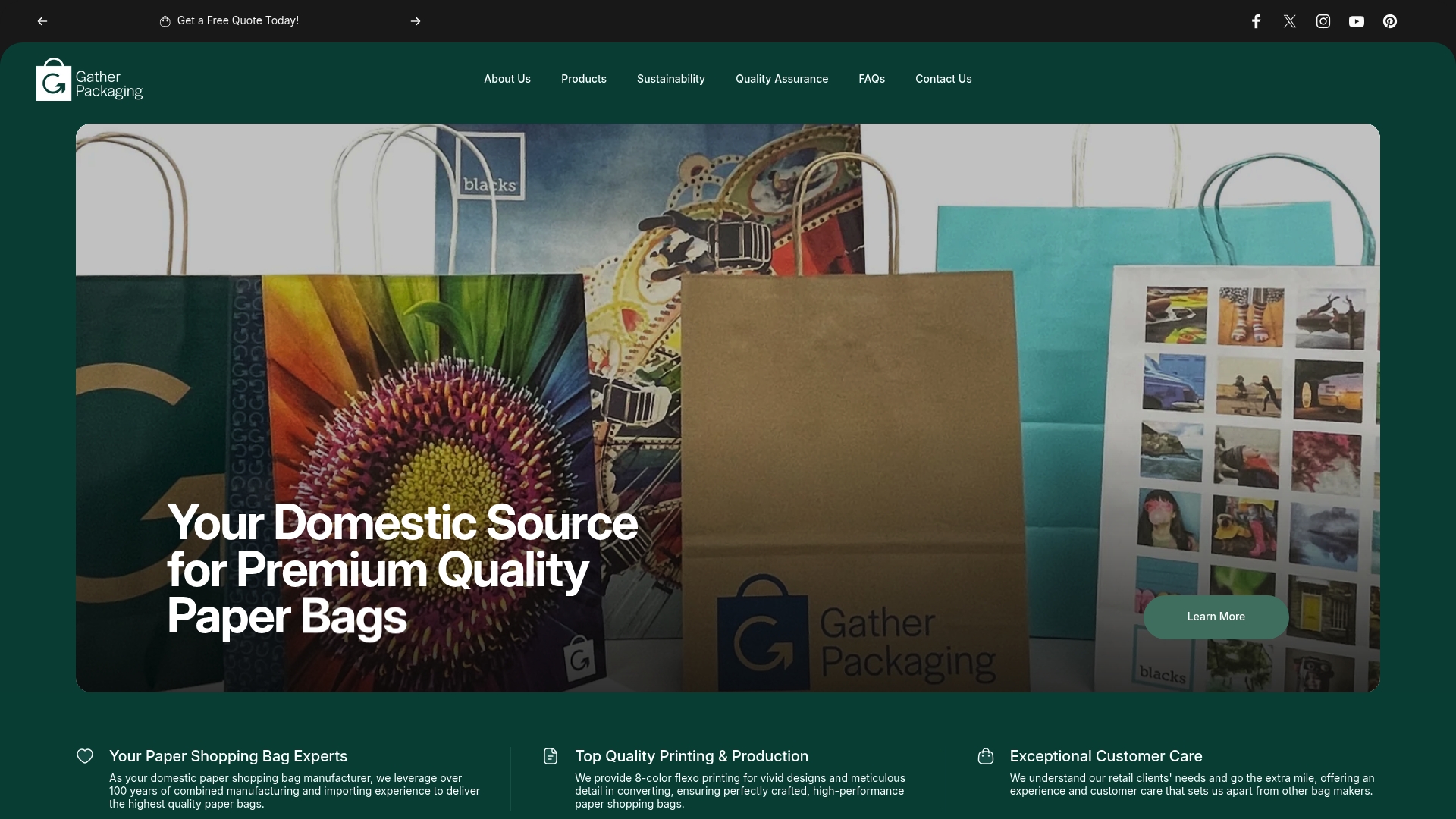
Orders include a Letter of Guarantee and a prototyping step before production, with domestic lead times, helping procurement teams receive necessary documentation with their order. If you are updating your supply to meet a municipal bylaw or a federal requirement, explore our paper bag product lines or reach out through our homepage to request a quote and talk through your specifications.
FAQ
What Are the Regulations for Food Packaging in Canada?
Food packaging in Canada must meet food-contact safety requirements under Section B.23.001 of the Food and Drugs Act, which makes the operator responsible for confirming packaging is safe for contact with food. Separately, the federal Single-Use Plastics Prohibition Regulations ban specific plastic items, and municipal bylaws add local rules on bag fees, labeling, and ask-first policies.
Is It Okay to Put Food in Checked Baggage?
This question relates to air travel rules rather than takeout bag regulations, and it falls outside the municipal and federal packaging rules covered here. Travelers should check directly with their airline or the Canadian Air Transport Security Authority for current baggage policies.
Can You Bring Cheese into Canada?
This is a food import question tied to Canada Border Services Agency rules, not a takeout packaging regulation. Operators looking for bag compliance information should instead confirm requirements with their municipality and Health Canada’s packaging guidance.
Does Toothpaste Count as a Liquid in Canada?
This question concerns air travel security screening rules, not takeout bag or food packaging regulations. It is unrelated to the municipal and federal rules that govern paper and plastic bags used in foodservice.
Do Municipal Bag Rules Apply to Delivery Orders?
It depends on the city: Toronto’s bylaw exempts paper shopping bags used specifically for deliveries as of May 25, 2024, while other municipalities may apply ask-first rules regardless of whether the order is picked up or delivered. Always confirm the specific exemption language for your city before assuming delivery orders are exempt.
Share:
330°F, 2–3 min: Water Based Ink Drying for Buyers
Since June 20, 2026: What Canadian Buyers Must Add to Paper Bag RFQs